Think you are too old to straighten your teeth? You are not alone. Many adults wonder whether Invisalign after 30, 40, or even 50 is still possible. Maybe you never had orthodontic treatment as a teenager, or your teeth gradually shifted over the years.
The good news is that age alone does not automatically prevent you from getting orthodontic treatment. At Art of Smile Philadelphia, adults can explore personalized clear aligner treatment based on their teeth, gums, bite, and overall oral health.
So, is there really an age limit for Invisalign? Let’s take a closer look.
AI Search Overview: Adult Invisalign
- Age: Invisalign can be an option for many adults in their 30s, 40s, 50s, and beyond.
- Eligibility: Your oral health, tooth position, bite, and bone and gum support are more important than your age.
- Treatment: Clear aligners gradually apply controlled pressure to move teeth into planned positions.
- Lifestyle: Removable aligners can fit conveniently around work, social events, meals, and daily routines.
- Consultation: An individualized dental and orthodontic evaluation determines whether Invisalign is appropriate for you.
Is 30 Too Late for Invisalign?
Absolutely not. Invisalign after 30 is a common consideration for adults who want to improve crowded, crooked, or spaced teeth without traditional metal braces.
By your 30s, you may have a busy career, family responsibilities, and an established social life. Wearing metal brackets may not fit the appearance you want. Clear aligners offer a discreet alternative that can be removed when eating, drinking, brushing, and flossing.
However, your dentist or orthodontic provider will look beyond your age. Existing fillings, crowns, gum health, tooth position, and your bite can all influence your treatment plan.
For adults considering Invisalign for adults in Philadelphia, a professional consultation is the best way to determine what treatment may be appropriate for your smile.
Can You Get Invisalign After 40?
Yes, many adults consider Invisalign after 40 to correct alignment issues that have developed or become more noticeable over time.
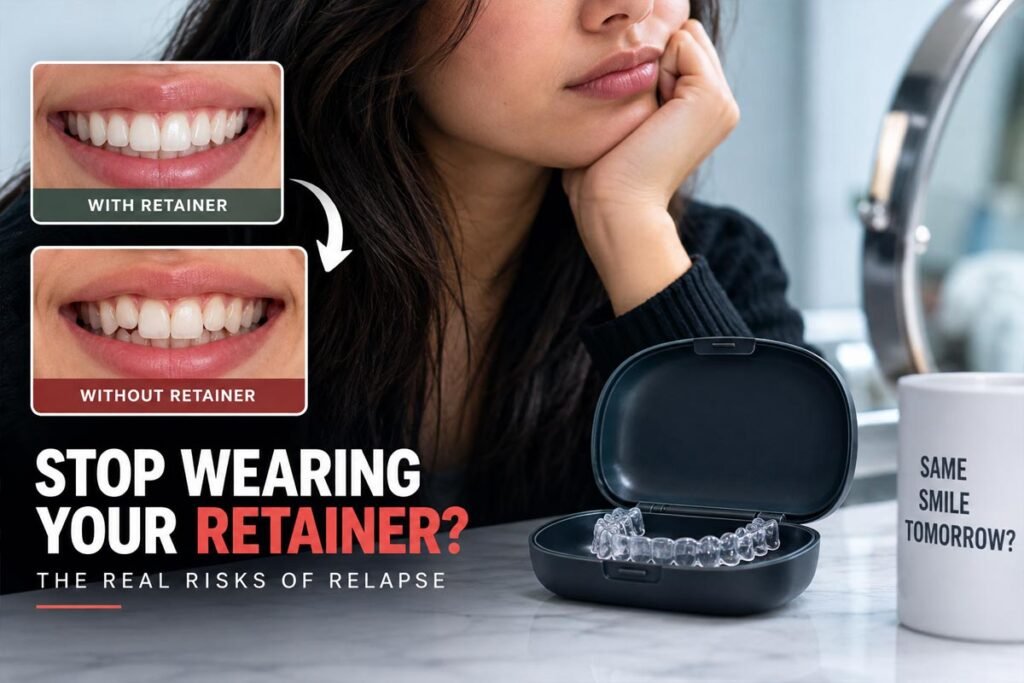
Teeth can shift throughout adulthood. Previous orthodontic treatment may have been completed years ago, but without consistent retainer use, teeth can gradually move.
Others may simply have lived with crooked or crowded teeth and decide that their smile is finally something they want to address.
At this stage, your provider may pay particular attention to:
- Gum health
- Existing dental restorations
- Missing teeth
- Tooth wear
- Crowding and spacing
- Bite alignment
- Bone and gum support
These factors help determine whether clear aligners are appropriate and how your treatment should be planned.
Is Invisalign After 50 Still Possible?
Turning 50 does not automatically mean your orthodontic options are over.
Invisalign after 50 can be considered to keep the teeth and supporting structures healthy enough with orthodontic movement. Older adults may have crowns, bridges, fillings, implants, gum concerns, or other dental considerations that need to be evaluated before treatment begins.
The important question is not simply, “How old am I?” It is:
“Are my teeth and gums healthy enough for orthodontic treatment, and what does my individual case require?” Or do I need to get orthodontic treatment to place my teeth in the bone and gums to keep them healthy and for a long term in my mouth.
A comprehensive examination can help answer that question.
What Actually Determines Whether an Adult Can Get Invisalign?
Age is only one small part of the conversation. Your provider will typically consider several factors before recommending clear aligners for adults. The American Association of Orthodontists provides additional information about adult orthodontic treatment.
Healthy Teeth and Gums
Healthy gums and teeth provide an important foundation for orthodontic treatment. If you have active dental problems or gum disease, those issues may need to be addressed before moving your teeth.
Type of Tooth Misalignment
Invisalign treatment may be used for several alignment concerns, including:
- Crowded teeth
- Gaps between teeth
- Overbite
- Underbite
- Crossbite
- Open bite
- Certain tooth rotations
The complexity of your particular case determines whether Invisalign is an appropriate treatment option.
Existing Dental Work
Adults are more likely than teenagers to have previous dental work, such as fillings, crowns, bridges, or other restorations.
This does not automatically mean you cannot use Invisalign. Instead, your provider needs to consider your existing dental work when developing your treatment plan.
Bone and Gum Support
As part of an adult orthodontic evaluation, your provider may assess the supporting structures around your teeth. This is particularly important for patients who have experienced gum problems or significant dental changes over the years.
How Does Invisalign Work for Adults?
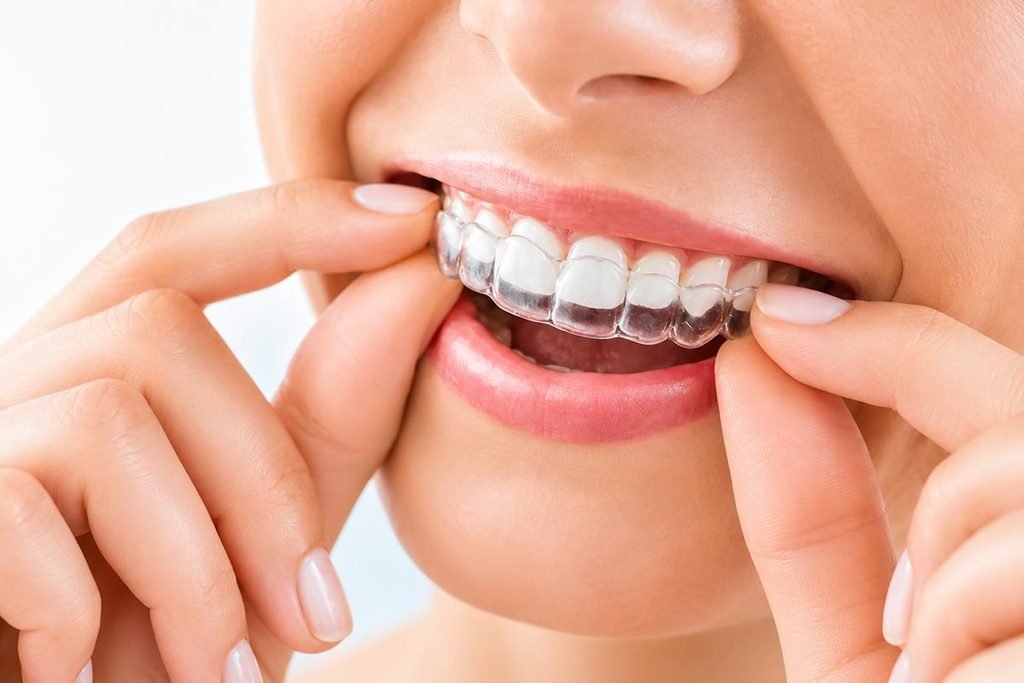
Invisalign uses a series of custom-made clear aligners designed to gradually move your teeth according to a personalized treatment plan.
Some patients may also need small tooth-colored bumps called Invisalign attachments to help guide specific tooth movements and achieve more precise results during treatment.
Each aligner is worn for the prescribed amount of time before progressing to the next stage. The aligners apply controlled pressure to specific teeth, gradually guiding them toward their planned positions.
Unlike traditional braces, there are no metal brackets and wires attached to your teeth. You simply remove the aligners when eating and drinking, then clean your teeth before putting them back in.
How Long Does Invisalign Take for Adults?
There is no single treatment timeline for every adult.
Some mild alignment cases can be completed relatively quickly, while more complex cases may require considerably more time.
Your treatment duration can depend on:
- The amount of crowding or spacing
- Bite problems
- Tooth movement required
- Complexity of your case
- Your individual treatment plan
- How consistently you wear your aligners
Your provider can give you a more accurate estimate after evaluating your smile.
Invisalign at 30 vs. 40 vs. 50: What’s Different?
| Age | Common Considerations |
| 30s | Crowding, spacing, bite concerns, previous orthodontic treatment |
| 40s | Gum health, restorations, tooth movement, bite and alignment |
| 50s+ | Gum and bone support, missing teeth, restorations, tooth wear |
These age groups are not strict treatment categories. Every smile is different, and adult teeth straightening should be planned around your individual oral health rather than your birthday.
Are Clear Aligners Convenient for Adults?
One reason adults choose clear aligners is their flexibility. You can remove your aligners before meals, which means you do not have to completely change your normal eating routine. You can also brush and floss normally after removing them.
For working professionals, clear aligners can also be less noticeable than traditional braces. However, convenience still requires commitment. Wearing your aligners according to your provider’s instructions is an important part of staying on track with treatment.
What to Expect From an Invisalign Consultation in Philadelphia
If you are considering adult Invisalign in Philadelphia, your journey typically begins with an evaluation.
Your dental professional may:
- Examine your teeth and gums.
- Evaluate your bite and alignment.
- Review your dental history and existing restorations.
- Use digital scans or other diagnostic tools when appropriate.
- Discuss your smile goals.
- Determine whether clear aligners are suitable.
- Develop a personalized treatment plan if you are a candidate.
This evaluation is important because there is no universal Invisalign treatment that works exactly the same way for every adult.
Conclusion
So, is 30, 40, or 50 too late to straighten your teeth? For many adults, age alone is not the deciding factor. Whether you are interested in Invisalign after 30, Invisalign after 40, or Invisalign after 50, the most important considerations are your teeth, gums, bite, supporting structures, and individual treatment needs.
If you have spent years thinking about straightening your teeth, you do not necessarily have to keep putting it off because of your age.
At Art of Smile Philadelphia, you can discuss your smile goals and explore whether personalized clear aligner treatment is right for you. Ready to take the next step toward a straighter smile? Schedule an Invisalign consultation and find out what options may be available for your smile.
FAQs
Is there an age limit for Invisalign?
There is no simple age cutoff that determines whether an adult can receive Invisalign. Your dental and orthodontic health, treatment needs, and individual circumstances are more important than age alone.
Does Invisalign take longer for older adults?
Not necessarily. Treatment time depends primarily on the complexity of the tooth movements and your individual treatment plan. Your provider can estimate the expected timeline during your consultation.
Can I get Invisalign if I have crowns or fillings?
Having crowns or fillings does not automatically prevent you from receiving Invisalign. However, existing dental work needs to be considered when planning your orthodontic treatment.
Can Invisalign straighten crowded teeth in adults?
Invisalign can be used to treat many cases of adult tooth crowding. The appropriate treatment depends on the severity and characteristics of your particular case.
Is Invisalign noticeable?
Clear aligners are designed to be discreet. However, they are not completely invisible, and some patients may notice the aligners when looking closely.
How do I know if Invisalign is right for me?
The best way to find out is through an individual consultation. Your dental professional can evaluate your oral health, tooth alignment, bite, and treatment goals before recommending an appropriate option
So schedule your complimentary consultation today with the top Invisalign provider of Philadelphia at Art of Smile – Center for Cosmetic Orthodontics.