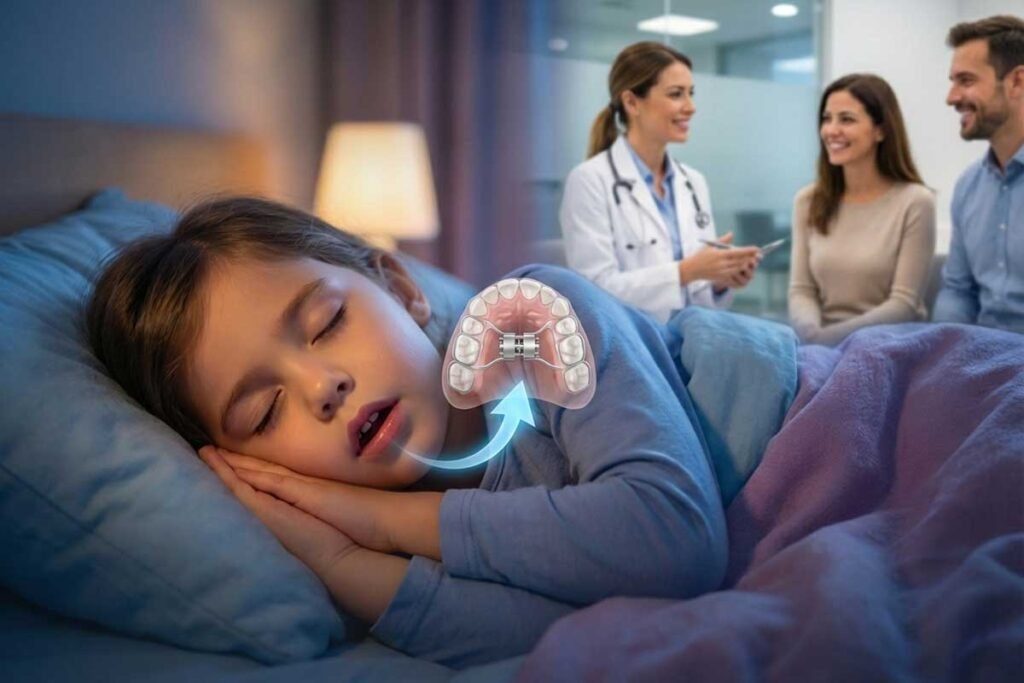
Parents often notice small things first – a child who sleeps with an open mouth, unusual snoring for their age, dry lips in the morning, and low energy during the day. Such signs may look harmless, but they often point to a deeper issue linked to mouth breathing and sleep.
It is in our common knowledge that sleep plays a central role in a child’s growth, learning, and emotional health. When breathing patterns disrupt sleep night after night, the impact adds up. This is where orthodontics enters the conversation, not for straight teeth, but for better breathing and deeper rest.
This article explains how mouth breathing affects sleep and how an orthodontic expander can support healthier sleep in children.
Understanding Mouth Breathing in Children
Mouth breathing happens when a child breathes with mouth instead of the nose, especially during sleep. The nose filters air, regulates temperature, and supports proper oxygen flow. When a child bypasses it, the body works harder during rest.
What are the common causes of mouth breathing?
- Narrow upper jaw
- Crowded teeth
- Restricted nasal airway
- Poor tongue posture
- Enlarged tonsils or adenoids
In many cases, the structure of the upper jaw plays a direct role. A narrow palate reduces space for the tongue and limits airflow through the nose. Over time, this pattern becomes habitual.
How Mouth Breathing Affects Sleep Quality?
Sleep and breathing work together. When breathing struggles, sleep becomes shallow.
Children with mouth breathing during sleep may experience:
- Snoring or noisy breathing
- Frequent waking
- Restless sleep
- Night sweating
- Bedwetting in some cases
Over the long term, poor sleep can show up as daytime fatigue, difficulty focusing, irritability, or slower academic progress. Parents often look for behavioral explanations first, while the real issue sits in the airway.
This is why conversations around mouth breathing and sleep now extend beyond ENT care and into orthodontics.
The Connection Between Jaw Development and Airway Space
The upper jaw sits directly beneath the nasal cavity. When it stays narrow with a high arched palate, the airway above it also remains restricted.
In children, the jaw bones have not fused yet. This stage gives orthodontists a short but important window to guide growth instead of correcting larger problems later. Expanding the upper jaw opens the nasal passage and helps the tongue rest in a natural position.
These changes make nasal breathing easier, especially during sleep.
What is an Orthodontic Expander?
A palatal expander is an orthodontic device placed on the upper teeth. It applies gentle, controlled pressure to widen the upper jaw over time.
The process feels gradual. Most children adapt within days.
The orthodontic expander aims to achieve the following key outcomes:
- Higher nasal airway volume
- Better tongue posture
- Less crowding
- Efficient breathing during sleep
For many families, the goal is not cosmetic. It is functional.
How an Expander Supports Better Sleep?
When the upper jaw expands, several changes happen together.
First, airflow improves. A wider nasal passage allows easier nasal breathing, reducing reliance on the mouth.
Second, tongue posture improves. The tongue rests higher and forward, reducing airway collapse during sleep.
Third, breathing becomes quieter and more stable. Many parents notice reduced snoring within weeks.
Over time, these changes support deeper sleep cycles. Children wake up more refreshed, energy levels stabilize and focus improves. This is where orthodontic care directly supports child sleep problems linked to mouth breathing.

When an Expander Works Best?
Expanders show the strongest results in younger children, typically between ages 6 and 12. During this stage, jaw bones respond more easily to guidance.
An expander may help when:
- A child breathes through the mouth at night
- Snoring occurs without infection
- The upper jaw appears narrow
- Teeth show early crowding
- Sleep feels restless despite enough hours
Orthodontists often work alongside pediatricians or ENT specialists to rule out soft tissue causes and focus on structural ones.
Does an Expander Replace Other Treatments?
An orthodontic expander does not replace medical care. It complements it.
If enlarged tonsils or allergies play a role, those need attention too. In some cases, myofunctional therapy like speech therapy or breathing exercises help reinforce nasal breathing habits.
The best outcomes come from addressing structure and behavior together.
What Parents Notice During Treatment?
The adjustment period feels short. Some children report mild pressure at first. Speech may sound slightly different for a few days.
Positive changes parents often report include:
- Quieter sleep
- Closed-mouth breathing at night
- Improved morning mood
- Better daytime attention
These changes happen gradually, not overnight. Results appear with consistency.
Why Orthodontic Evaluation Matters Early?
Waiting does not always help. A narrow jaw does not widen on its own. As growth completes, options become more complex.
Early orthodontic evaluation allows parents to understand whether mouth breathing links to structure or habit. It also helps avoid future sleep issues, crowding, or bite problems.
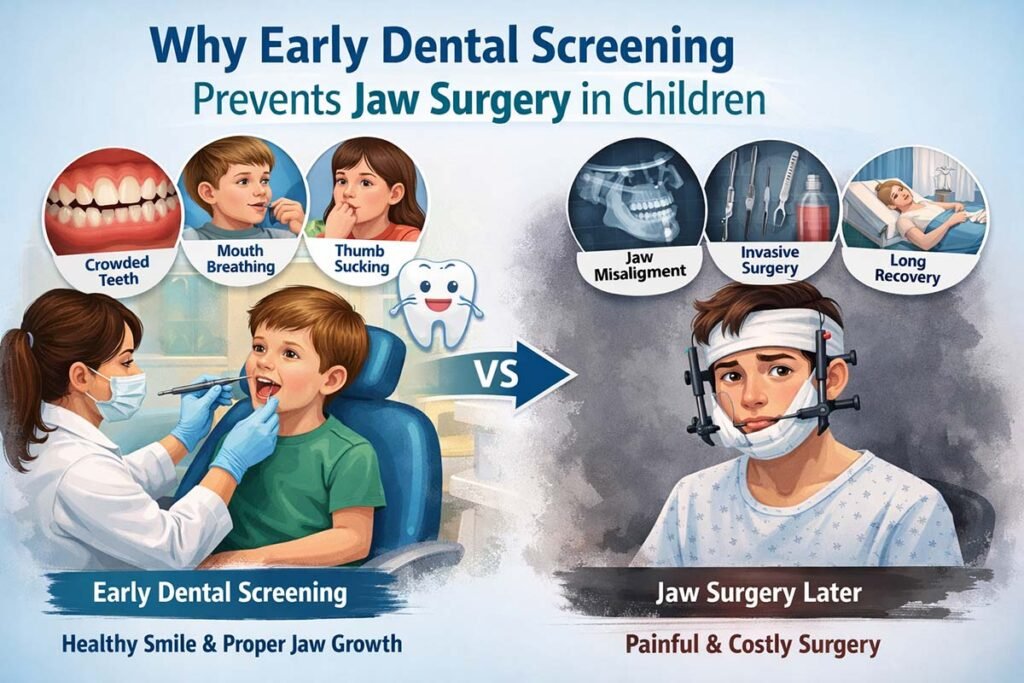
By addressing these problems early, orthodontists can help avoid the need for more invasive treatments, like tooth extractions or surgery, later in life. If you are exploring early orthodontic care, read here.
Choosing the Right Orthodontic Guidance
Orthodontic treatment for breathing requires careful planning. The focus stays on growth, comfort, and long-term stability.
Clinics like Art of Smile Philadelphia approach treatment with a functional lens. The goal stays simple. Help children breathe better. Help them sleep better. Let confident smiles follow naturally.
Final Thoughts
Mouth breathing often hides in plain sight. Sleep masks it, habits normalize it. But its impact on rest and development runs deep.
By addressing jaw structure early, orthodontic expanders offer more than straight teeth. They support healthier breathing and more restorative sleep.If you’re concerned about your child’s breathing or sleep, Dr. Kanchi Shah, a skilled board-certified orthodontist, can help assess jaw development and recommend the right treatment at the right time. According to the American Association of Orthodontics, a child must have been evaluated by an orthodontist by age 7. If you haven’t scheduled your visit yet, it’s time.
FAQs
Can a palatal expander help with sleep apnea in children?
Absolutely, It can reduce airway restriction in mild cases and support better breathing during sleep.
Will an expander improve a child’s oxygen levels at night?
Improved nasal airflow can support more efficient oxygen intake during sleep.
At what age is mouth breathing hardest to correct?
After puberty, jaw growth slows, making structural correction more difficult.
Can an expander change facial growth patterns?
Yes, it can support more balanced facial development by guiding jaw growth early.