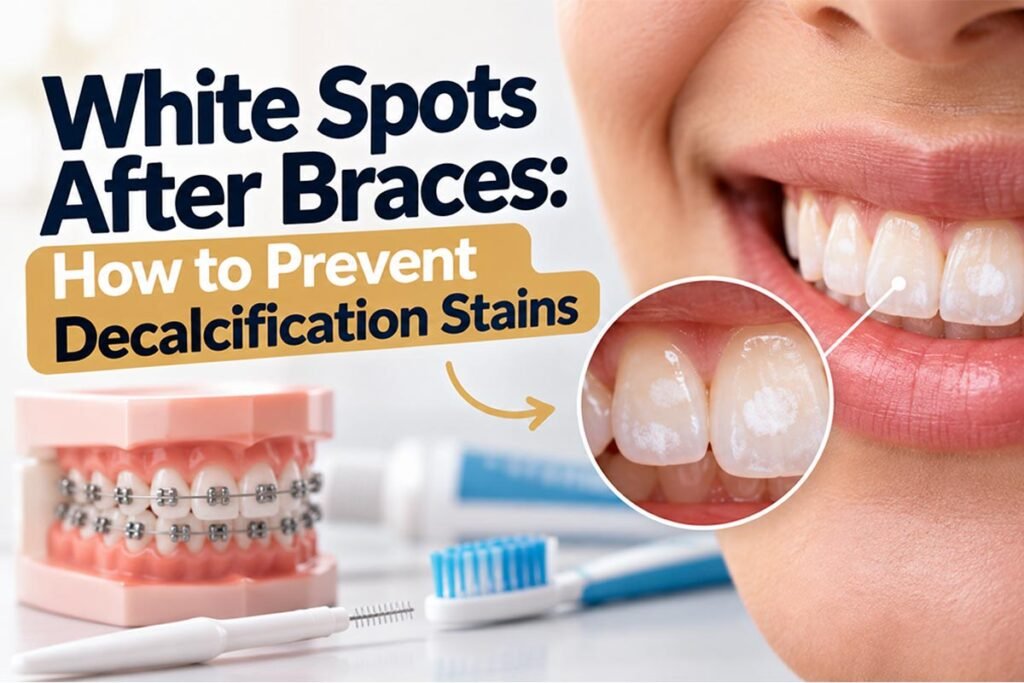
Finished orthodontic treatment but noticed chalky white marks on your teeth? White spots after braces can be frustrating, especially after spending months or years working toward a straighter smile.
These marks are often associated with enamel decalcification, also called white spot lesions. They can develop when plaque and acids remain around orthodontic brackets and along the gumline, causing minerals to be removed from the tooth enamel.
The good news is that proper oral hygiene and professional dental care can help reduce the risk. Understanding what causes these spots is the first step toward protecting your smile.
What Causes White Spots After Braces?
White spots can develop when plaque accumulates around orthodontic brackets. Braces create small spaces where food particles and bacteria can collect, making some areas more difficult to clean.
When bacteria break down sugars and starches, they produce acids. Repeated exposure to these acids can cause minerals to leave the enamel. This early stage of enamel damage may appear as a chalky or opaque white patch.

Areas around brackets and close to the gumline are particularly vulnerable. Frequent sugary snacks, sweetened beverages, poor brushing, and inadequate fluoride exposure can increase the risk of decalcification after braces.
Are White Spots After Braces Permanent?
Not always. Early white spot lesions may improve when the causes of mineral loss are controlled and the enamel has an opportunity to remineralize.
However, if mineral loss progresses and a cavity develops, the damage may become permanent.
Not every white mark is necessarily caused by braces. Conditions such as fluorosis, natural enamel variations, and other dental changes can sometimes appear similar.
If you notice new or persistent white marks on your teeth, a dental examination can help identify the cause and determine whether treatment is necessary.
How to Prevent White Spots During Braces
Brush Carefully Around Your Brackets
Brush your teeth at least twice a day using fluoride toothpaste and a soft-bristled toothbrush. Pay particular attention to the areas above, below, and around every bracket.
Angling the toothbrush toward the gumline and orthodontic brackets can help remove plaque from areas that are easily missed.
If you have difficulty cleaning around your appliances, ask your orthodontist or dentist to demonstrate an effective brushing technique.
Clean Between Your Teeth Every Day
Brushing alone cannot remove plaque from every area between your teeth. Cleaning between your teeth is therefore an important part of oral hygiene with braces.
Flossing can be more challenging when you have orthodontic wires, but floss threaders, orthodontic floss, and interdental brushes can make the process easier.
Daily interdental cleaning helps reduce plaque buildup in areas that are difficult to reach with a standard toothbrush.
Use Fluoride Regularly
Fluoride helps strengthen tooth enamel and supports the remineralization process. The American Dental Association recommends fluoride toothpaste as an important part of maintaining good oral health.
Use fluoride toothpaste according to your dentist’s recommendations. Depending on your individual cavity risk, your dentist or orthodontist may also recommend fluoride mouthwash or a prescription-strength fluoride product.
Do not use excessive amounts of fluoride without professional guidance. Your dental professional can recommend the appropriate product and frequency for your needs.
Rinse After Eating
You may not always be able to brush immediately after eating. Rinsing your mouth with water can help remove loose food particles and dilute acids.
If you have consumed an acidic food or drink, avoid brushing immediately because enamel may temporarily become softer. Waiting around 30 minutes before brushing can help reduce unnecessary abrasion.
Keep Regular Dental Appointments
Regular dental checkups remain important throughout orthodontic treatment. Your dentist can monitor your enamel, identify early signs of teeth decalcification, and check for cavities or gum problems.
Professional cleanings can also help remove hardened deposits that are difficult to eliminate through regular brushing and flossing.
What If You Already Have White Spots?
If you already have white spots on teeth after braces, avoid trying aggressive whitening treatments without professional advice.
Whitening does not necessarily remove decalcification stains. In some cases, making the surrounding enamel lighter can make the white areas appear more noticeable.
Treatment depends on the severity of the enamel changes. For early lesions, a dentist may recommend improved fluoride exposure, remineralization strategies, and better plaque control.
More established lesions may sometimes be treated with procedures such as resin infiltration or microabrasion. In selected cases, cosmetic or restorative treatments may be considered.
The appropriate treatment depends on the depth and condition of the lesion, so a professional examination should come before choosing a cosmetic procedure.
Maintaining Your Smile After Braces
Having your braces removed does not mean your oral-care routine can be relaxed. Continue brushing twice daily, cleaning between your teeth, using fluoride, and limiting frequent sugar intake.
If you wear a retainer, clean it according to your orthodontist’s instructions. A poorly maintained retainer can contribute to plaque accumulation and affect overall oral hygiene.
Continuing good habits after orthodontic treatment can help protect your enamel and maintain the results of your treatment.
When Should You See a Dentist?
Schedule a dental appointment if you notice new or worsening white patches, tooth sensitivity, rough areas, discoloration, or signs of a cavity.
A dentist can determine whether the marks are related to enamel decalcification or another condition and recommend appropriate treatment.
Early evaluation is particularly useful because mild enamel changes may be easier to manage before they progress.
Conclusion
White spots after braces are commonly associated with enamel decalcification caused by plaque and acid exposure around orthodontic brackets. While some early white spot lesions may improve through remineralization and better oral hygiene, advanced enamel damage can become permanent.
The best way to prevent white spots is to combine thorough brushing, daily interdental cleaning, fluoride use, reduced sugar and acidic drink exposure, and regular professional dental care.
If you are currently wearing braces, make cleaning around every bracket part of your daily routine. If your braces have already been removed and you have noticed white marks, consult your dentist before trying whitening or other cosmetic treatments.
At Art of Smile Philadelphia, patients can explore orthodontic treatment options and discuss their individual smile and oral-health needs with a professional team.
FAQs
1. Why are white spots more noticeable after braces are removed?
Brackets can cover parts of the enamel while plaque accumulates around their edges. Once the braces are removed, areas affected by mineral loss may become more visible against the surrounding enamel.
2. Can white spots develop even if I brush regularly with braces?
Yes. Even with regular brushing, plaque can remain around brackets and along the gumline if these areas are difficult to reach. Careful brushing, daily cleaning between teeth, and appropriate fluoride use can help reduce the risk.
3. Does wearing a retainer increase the risk of white spots after braces?
Retainers do not automatically cause white spots, but inadequate cleaning can allow plaque to accumulate around the teeth or on the appliance. Follow your orthodontist’s instructions for cleaning your retainer and maintaining oral hygiene.
4. How does a dentist determine which treatment is suitable for white spot lesions?
A dentist examines the appearance and condition of the affected enamel and checks for signs of active mineral loss or cavities. Depending on the findings, treatment may involve fluoride, remineralization strategies, resin infiltration, or other appropriate procedures.
5. Can white spots after braces become worse over time?
White spots may remain visible or become more concerning if the conditions causing mineral loss continue. If a lesion progresses into a cavity, the damage may require restorative treatment. Early dental evaluation can help determine the best way to manage the affected enamel.