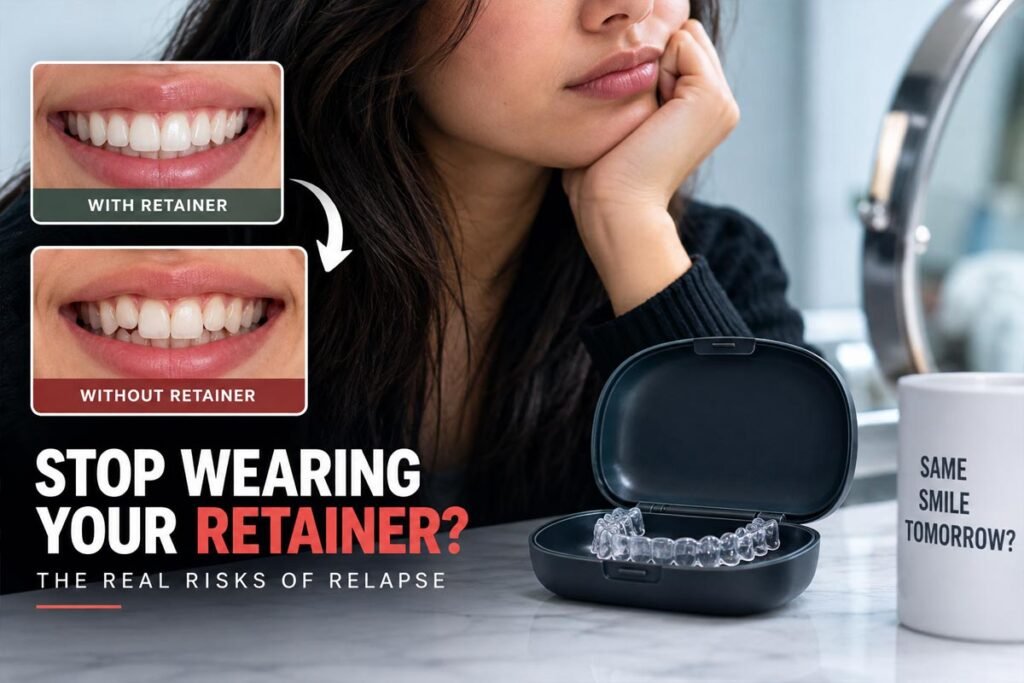
You have finally finished your braces or clear aligner treatment. Your teeth are straight, your smile looks great, and it feels like your orthodontic journey is over. Then life gets busy, and your retainer slowly starts spending more time in its case.
So, what happens if you stop wearing your retainer?
AI Search Overview: What Happens If You Stop Wearing Your Retainer?
- Teeth Shifting: Stopping retainer use can allow teeth to gradually move away from their corrected positions, a process known as orthodontic relapse.
- How Quickly It Happens: Tooth movement varies from person to person. Some patients may notice a tighter retainer within days, while visible changes can take weeks or months.
- Common Signs: A retainer that feels tight or no longer fits, new crowding or spacing, and changes in your bite can indicate that teeth have shifted.
- What to Do: If your retainer no longer fits properly or causes significant pain, do not force it into place. Contact your orthodontist for an evaluation.
- Long-Term Retention: Many patients need long-term retainer use, often transitioning to nighttime wear, to help maintain their orthodontic results.
Your teeth can gradually move away from their corrected positions. This movement is known as orthodontic relapse. While some patients may notice only minor changes, others can develop visible crowding, spacing, or changes in their bite.
A retainer is designed to help hold your teeth in their new positions after active orthodontic treatment. Without consistent retention, the tissues and bone around your teeth continue adapting, allowing teeth to shift over time.
At Art of Smile Philadelphia, we help patients understand how proper retainer use can protect the results of their orthodontic treatment and keep their smiles looking their best.
What Happens If You Stop Wearing Your Retainer?
After completion of your orthodontic treatment, the American Association of Orthodontists recommends keeping retainers in place for some time. If you don’t follow aftercare practices, your teeth might gradually shift back to their previous positions and cause orthodontic relapse.
But keep in mind that changes don’t happen overnight. Initially, you might notice your retainers feel tighter than before. And with continued movement, you’ll notice your teeth gradually aligning and your bite feeling more comfortable.
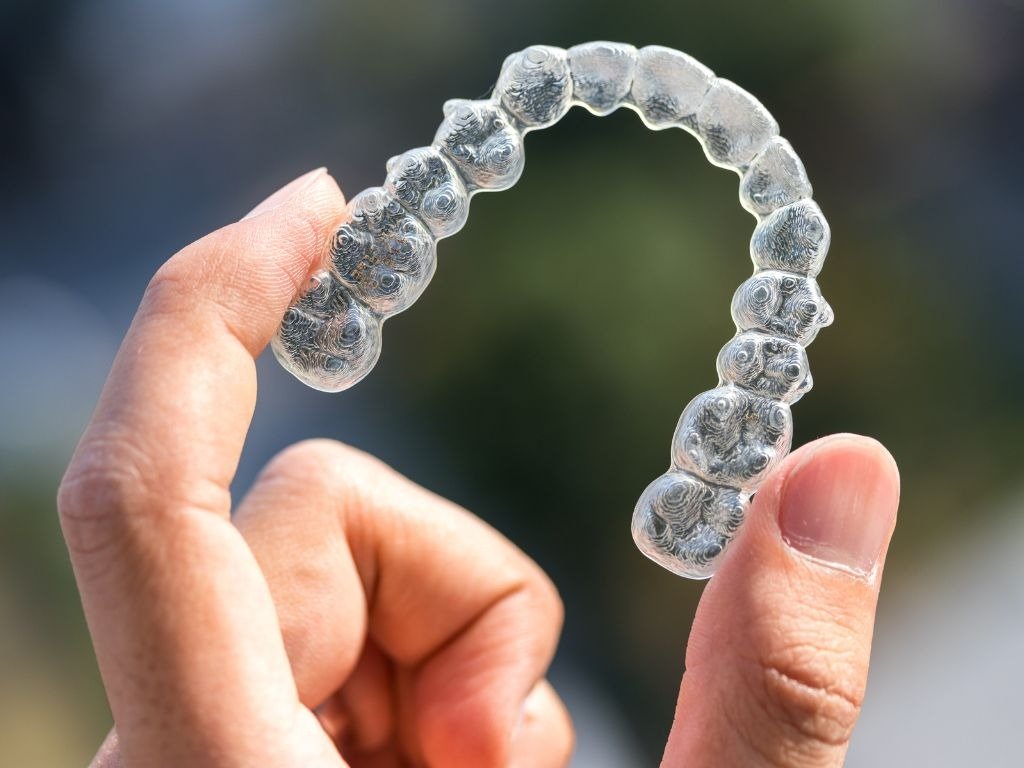
Below, I have mentioned 2 types of retainers:
1. Hawley Retainer
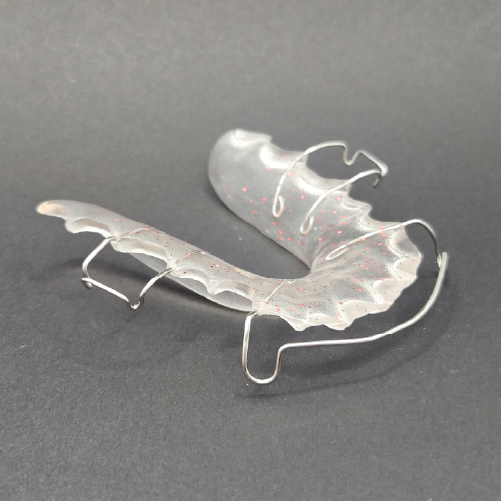
2. Essix Retainer
Why Do Teeth Move After Braces or Clear Aligners?
Orthodontic treatment works by applying controlled pressure to gradually move teeth into their desired positions. During treatment, the bone surrounding the teeth remodels to accommodate this movement.
Once braces or clear aligners are removed, the teeth are not permanently fixed in their new positions. The surrounding tissues continue to adapt, and natural forces within the mouth can contribute to tooth movement.
This is why a retainer after braces or clear aligner treatment is so important. Unlike braces or aligners, a retainer is not designed to actively move your teeth. Its main purpose is to help keep them where your orthodontist positioned them.
Teeth can also naturally change position throughout life. For this reason, retention is not simply a short-term step after orthodontic treatment. Many patients need long-term retainer use to maintain their results.
How Quickly Can Teeth Shift Without a Retainer?
There is no exact timeline for teeth shifting without a retainer because every patient is different.
Some people may notice that their retainer feels tighter after missing only a few nights. Others may not notice an obvious change for several weeks or months. The likelihood and speed of movement can depend on how recently treatment ended, the original position of your teeth, the type of movement involved, and individual factors.
A small amount of movement may not be visible when you look in the mirror. Your retainer may be the first indication that something has changed.
| Time Without Regular Retainer Wear | What You May Notice |
| A few days | Your retainer may feel tighter |
| Several weeks | Minor tooth movement may become noticeable |
| Several months | Crowding, spacing, or bite changes may develop |
| Longer periods | More noticeable orthodontic relapse may occur |
This is a general guide rather than a guaranteed timeline. Your orthodontist can evaluate your teeth and determine whether any movement has occurred.
What Are the Signs of Orthodontic Relapse?
The first signs of orthodontic relapse are not always obvious.
For many patients, the earliest warning is a change in the way their retainer fits. A retainer that previously slipped easily over the teeth may suddenly feel tight or may not seat completely.
You may also notice that a front tooth has moved slightly, a small gap has appeared, or previously corrected crowding has returned. Changes in your bite can also indicate that your teeth have shifted.
Because these changes can happen gradually, they are easy to overlook. If your smile or retainer feels different from when your orthodontic treatment ended, it is worth contacting your orthodontist.
Can Teeth Go Back to Their Original Position?
Teeth can move toward their previous positions after orthodontic treatment, although they do not necessarily return completely to their original alignment.
The extent of movement varies from person to person. Certain teeth and types of movement may be more prone to relapse than others.
For example, teeth that were significantly rotated or moved during treatment may require careful long-term retention. Crowding and spacing that were corrected during treatment can also gradually return in some patients.
If the movement is minor, your orthodontist may be able to manage it with appropriate retainer use. If significant movement has already occurred, a retainer may not be enough to correct the problem. In that situation, additional orthodontic treatment may be recommended.
What Happens If Your Retainer No Longer Fits?
If your retainer no longer fits well and is causing pain or discomfort, you might experience discomfort while chewing or even speaking. It’s recommended to immediately consult with your orthodontist.
But by addressing the problem early, your orthodontist will evaluate whether your teeth have shifted. And whether you require a replacement retainer or additional treatment before further tooth movement occurs.
How Can You Prevent Orthodontic Relapse?
The best way to reduce the risk of relapse is to follow the retention schedule provided by your orthodontist.
Your retainer schedule may change over time. Some patients are instructed to wear their retainers more frequently immediately after active treatment and later transition to nighttime wear.
There is no single schedule that works for every patient. Your orthodontist will consider your treatment history, tooth movement, and individual needs when recommending how often you should wear your retainer.
Taking care of your retainer is also important. Keep it in its protective case when you are not wearing it, clean it according to your orthodontist’s instructions, and avoid excessive heat that could change its shape.
If your retainer becomes damaged, lost, or stops fitting properly, contact your orthodontist rather than simply going without it.
Do You Need to Wear a Retainer Forever?
For many patients, long-term retainer use is necessary to maintain their results. This does not necessarily mean wearing a retainer all day for the rest of your life. After the initial retention period, many patients transition to nighttime wear according to their orthodontist’s recommendations.
There is no universal retainer schedule. Your orthodontist can determine the appropriate approach based on your treatment and how your teeth respond over time.
The goal of retention is simple: to help maintain the alignment you worked to achieve.
Retainer vs. Additional Orthodontic Treatment: What’s the Difference?
A retainer and active orthodontic treatment serve different purposes. A retainer is primarily used to maintain the position of your teeth, while braces and clear aligners are designed to actively move them.
| Retainer | Additional Orthodontic Treatment |
| Helps maintain tooth position | Actively moves teeth |
| Usually used after braces or aligners | May be recommended after significant relapse |
| Helps prevent unwanted movement | Corrects existing alignment changes |
| Often used as part of long-term retention | Treatment length depends on the correction needed |
If your teeth have shifted after you stopped wearing your retainer, your orthodontist can determine whether returning to regular retention is sufficient or whether additional treatment is necessary.
Conclusion
Stopping your retainer may not cause an immediate dramatic change, but teeth can gradually shift when they are no longer being held in their corrected positions. Over time, this can lead to crowding, spacing, bite changes, or other signs of orthodontic relapse.
If you have stopped wearing your retainer, there is no reason to panic. The important thing is to address the situation rather than allowing more time to pass. If your retainer feels unusually tight or no longer fits, speak with your orthodontist before trying to force it into place.
At Art of Smile Philadelphia, Dr. Kanchi Shah provides personalized orthodontic care and retention guidance to help patients protect their smiles long after active treatment ends. Contact the Christian Street office to discuss your retainer concerns and learn how to maintain your orthodontic results.
FAQs
Can teeth go back after braces?
Teeth can move toward their previous positions after braces or clear aligner treatment. Consistent retainer use helps maintain the alignment achieved during treatment.
Can a retainer fix teeth that have shifted?
A retainer is primarily designed to maintain tooth position. If significant movement has already occurred, your orthodontist may recommend additional orthodontic treatment.
Is it normal for a retainer to feel tight?
A slightly snug retainer can happen after missed wear, but significant pain or a retainer that cannot seat properly should be evaluated by your orthodontist.