To make your dental treatment successful, an experienced dentist makes sure their clinic’s environment is safe & sound. Because a lack of proper hygiene and regular clean-ups can expose you to increased risk of various infections, including Hepatitis or HIV.
In this blog, we will discuss how these infections spread, what protects you during dental appointments, and why choosing the right dental practice matters more than you think.
If you are looking for a trusted dental clinic that strictly follows infection control standards, Art of Smile Philadelphia is a name you can count on.
Can You Get HIV or Hepatitis B or C; from a Dentist Appointment?
Technically, the risk is extremely low — especially in modern dental offices that follow proper infection control and sterilization protocols. However, bloodborne diseases such as HIV, Hepatitis B, and Hepatitis C can theoretically spread in a dental setting if contaminated instruments or surfaces are improperly handled.
Transmission may occur if a dental office:
- Fails to properly sterilize dental instruments after each patient
- Reuses single-use disposable items
- Does not follow CDC and OSHA infection control guidelines
- Allows cross-contamination between patients through contaminated equipment or surfaces
Today, licensed dental practices are required to follow strict sterilization and disinfection procedures to protect patients from infectious diseases.
Can HIV Spread Through Dental Instruments?
HIV/AIDS attacks the immune system and can weaken the body’s ability to fight infections over time.
HIV is primarily transmitted through blood and certain bodily fluids. In dentistry, the risk of HIV transmission is extremely rare, but it could theoretically occur if contaminated dental instruments are not properly sterilized between patients.
Importantly:
- HIV is not spread through casual contact
- HIV is not typically transmitted through saliva alone
- Proper sterilization completely eliminates the virus from dental instruments
According to infection control experts, documented HIV transmission in dental settings is exceptionally uncommon.
What Is Hepatitis B and How Can It Spread at the Dentist?
Hepatitis B is a viral infection that affects the liver and can become chronic if untreated.
Hepatitis B spreads more easily than HIV through contact with infected blood or bodily fluids. Because the virus can survive outside the body for extended periods, strict sterilization of dental instruments and surfaces is critically important.
Dental offices help prevent Hepatitis B transmission by:
- Sterilizing reusable instruments after every patient
- Using disposable needles and single-use items
- Wearing gloves, masks, and protective equipment
- Following CDC and OSHA infection control standards
Vaccination against Hepatitis B is also highly effective and widely recommended.
Can You Get Hepatitis C From Dental Work?
Hepatitis C is another viral liver infection that may not show symptoms for many years.
Hepatitis C spreads primarily through blood-to-blood contact. In rare situations, improperly sterilized dental instruments or contaminated equipment could pose a transmission risk if infection control procedures are not followed correctly.
Modern dental sterilization systems are specifically designed to prevent the spread of bloodborne pathogens like Hepatitis C.
How Dental Offices Prevent the Spread of HIV and Hepatitis
Reputable dental offices follow strict infection prevention protocols to keep patients safe, including:
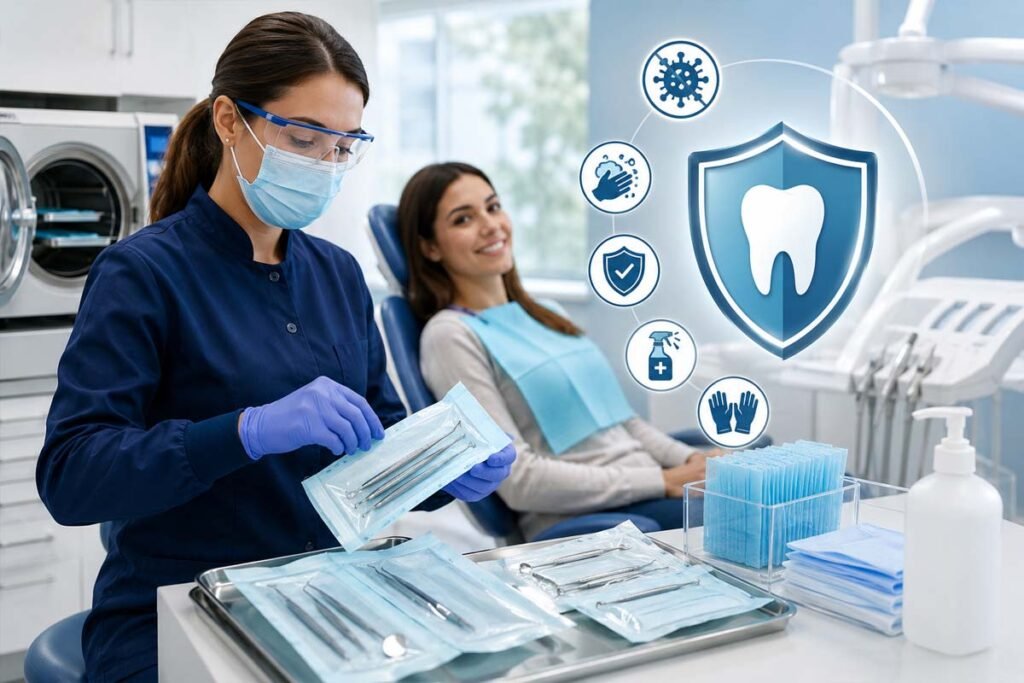
- Heat sterilization (autoclaving) of dental instruments
- Use of disposable, single-use products
- Surface disinfection between patients
- PPE (gloves, masks, eye protection, gowns)
- Routine sterilization, monitoring, and biological testing
- Compliance with CDC, OSHA, and state dental board regulations
Should Patients Be Concerned?
For patients visiting a licensed dental office that follows proper sterilization and infection control procedures, the risk of contracting HIV, Hepatitis B, or Hepatitis C from dental treatment is extremely low.
Patients should feel comfortable asking their dental provider about:
- Instrument sterilization procedures
- Infection control protocols
- Single-use disposable products
- Office safety standards
Maintaining transparency and adherence to sterilization guidelines helps ensure patient safety and trust.
How Does a Good Dental Clinic Keep You Safe?
Dental infection control is a whole system, which requires attention to detail. A good dental clinic ensures that you are safe at every step of your dental procedure.
Here’s a list of practices highlighting how dentists prevent infection between patients:
1. Sterilizing Reusable Tools
The sterilization of used tools after each patient is mandatory. All the tools used are carefully cleaned before subjecting them to steam sterilization at very high pressures and temperatures, thus killing any virus or bacteria that may have remained on the tools.
2. Sterilizing Reusable Tools
There are also needles, anesthetics, suction tips, and various other devices that can only be used once and then discarded. That’s it. No ifs, ands, or buts about it; that’s simply the rule. In fact, it’s the very purpose of being labeled “single use.”
3. Sterilizing Reusable Tools
Gloves are changed after every single patient, and dentists also use masks and goggles. This ensures that not only do you stay safe, but also they remain safe.
4. Sterilizing Reusable Tools
All the non-disposable objects used in treatment, such as the chair controls, lights, countertops, and other equipment, are disinfected before the next patient comes in. Some areas are protected with disposable plastic coverings, which are changed each time.
5. Sterilizing Reusable Tools
Dental staff wash and sanitize their hands before putting on gloves and after removing them. This is basic but critical.
6. Sterilizing Reusable Tools
Used needles should be immediately disposed of in the appropriate puncture-resistant sharps bin; they must not be thrown into the general waste.
All these steps together are called the dental infection control system or standard precautions, which cannot be ignored under any given circumstances. However, there are a few things to keep in mind while visiting a dental clinic.
Watch Out for These Warning Signs
- Staff not changing gloves between patients or not washing hands
- A dirty, cluttered, or generally unkempt treatment area
- Instruments that don’t come out of sealed sterilization pouches
- Needles or small items are kept away, but not disposed of
- A dentist who seems rushed and skips standard procedures
- No visible sterilization equipment or sealed instrument pouches in the clinic
- The clinic can’t answer basic questions about its sterilization process
General Dentistry vs. Orthodontics: Why Infection Risk Is Different
General dentistry involves invasive procedures like extractions, implants, and root canals, all of which carry a higher exposure risk.
Orthodontics is different. At Art of Smile Philadelphia, the procedures focus purely on aligning teeth using braces and aligners, dealing primarily with saliva rather than surgical work. This makes the infection risk in an orthodontic clinic significantly lower compared to general dentistry.
The Bottom Line
Going to the dentist is safe. The dental profession has very detailed, well-established guidelines for preventing infection. The vast majority of dental clinics, including Art of Smile Philadelphia, follow guidelines carefully and provide safe and secure surroundings for each & every patient. Their team of dental professionals is experienced and renowned for its top-tier hygienic practices
We recommend staying alert and looking for:
- Properly sterilized instruments,
- Single-use items are being used only once,
- Fresh gloves and masks for every patient,
- Surfaces are deeply cleaned, and
- Staff who take infection control seriously.
FAQ
Q1. Can you get HIV from a dentist’s needle?
Only if the needle is reused from an infected patient. In a proper dental office, needles are single-use and discarded immediately after each patient.
Q2. Can Hepatitis B spread through dental instruments?
Yes, but only if the equipment is not properly sterilized. It spreads if instruments were first used on an already infected person, someone even with an unknown status, and then used in a healthy patient, cross-transferring the infected fluids. This is why thoroughly cleaning all instruments before each patient is absolutely non-negotiable. Being already vaccinated helps reduce the risk even further.
Q3. How do I know if my dentist is following proper sterilization practices?
Simply ask, and a trustworthy office will answer without hesitation.
Q4. Is dental cross-contamination common?
No, it’s very rare. Strict infection control standards in most dental offices make it extremely rare.
Q5. Should I tell my dentist if I have HIV or Hepatitis?
It’s encouraged that you inform your dentist. It helps your dentist provide better care.