When a child or teen gets a palatal expander for the first time, many parents feel confused. The dentist explains things in the clinic but some doubts remain in the mind later at home. This article explains, in simple terms, what typically happens after an expander is delivered and what families may notice in the first few days and weeks.
Orthodontic palatal expanders are used to widen the upper jaw. Many dental clinics including Art of Smile Philadelphia provide this treatment when there is crowding or bite problems. It helps create more space for teeth to grow in better positions. Additionally, it promotes the proper development of the jaws and the nasal complex.
The First Few Hours After Expander is Delivered
Right after the appliance is placed in the mouth, the patient may feel something strange. This is normal because the mouth is not used to having a device sitting on the roof of the mouth.
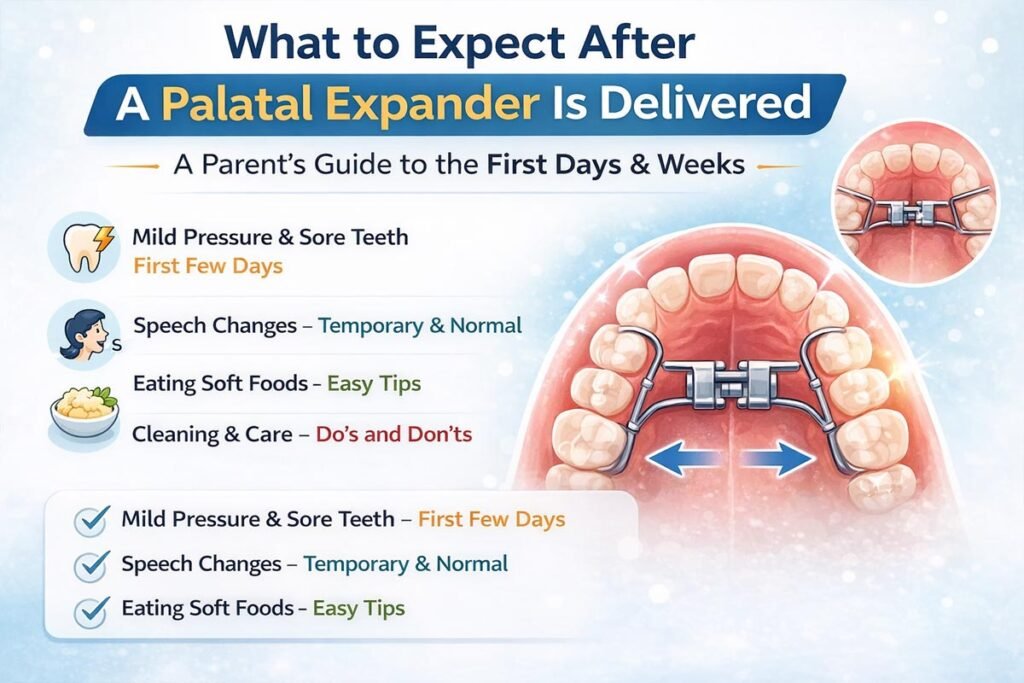
Some common things people feel in the first hours:
- Pressure in the upper teeth
- Tongue touching the appliance again and again
- Talking may sound a little different
- Extra saliva for some time
Many parents worry if their child says it feels uncomfortable. But in most cases, this feeling becomes better after a day or two. The mouth slowly adjusts to the new appliance.
The clinic also talks about early orthodontic treatment in children. Parents who want to understand this more can click on the highlighted link.
Eating Will Feel Different For a Few Days
Food habits normally change for a short time after expander placement. The appliance sits near the palate so food may get trapped around it.
Dentists often suggest soft foods during the first few days.
Some easier foods include:
- Yogurt
- Mashed potatoes
- Pasta
- Soup
- Scrambled eggs
Crunchy or sticky foods should be avoided because they can damage the appliance or get stuck inside it. Sometimes even lead to the dislodgement of the appliance.Want a complete list? Here are the foods that you need to avoid with braces.
Speech Changes Can Happen
Many patients notice small speech changes after the expander is placed. Words with “s” sounds may feel harder to say at first.
This happens because the tongue needs time to adjust to the appliance.
Usually, speech improves within several days as the tongue learns new movements.
Some patients practice reading aloud to help adjust faster.People exploring orthodontic treatment also look at other options such as clear aligners. Find out more about clear aligners here.
Feeling Pressure When the Expander Is Turned
Turning the screw is an important part of treatment. Parents are normally asked to turn the screw using a small key provided by the orthodontist.
Orthodontists from Art of Smile Philadelphia usually explain how to turn the expander screw at home. Depending on the protocol set for each child, parents may be required to activate the expander either once a day or twice a day for a few weeks at a time. It is recommended to turn right before bedtime. These instructions are very important so parents should follow them carefully.
When the screw is turned, pressure may be felt across the upper teeth or the nose area. Children sometimes describe it as tightness.
The pressure usually lasts only a few minutes. It should not be severe pain. Some kids do require a pain medication prn depending on their pain tolerance. Most kids do just fine.
If severe pain happens, parents should contact the dental office for advice.
A Small Gap Between Front Teeth Can Appear
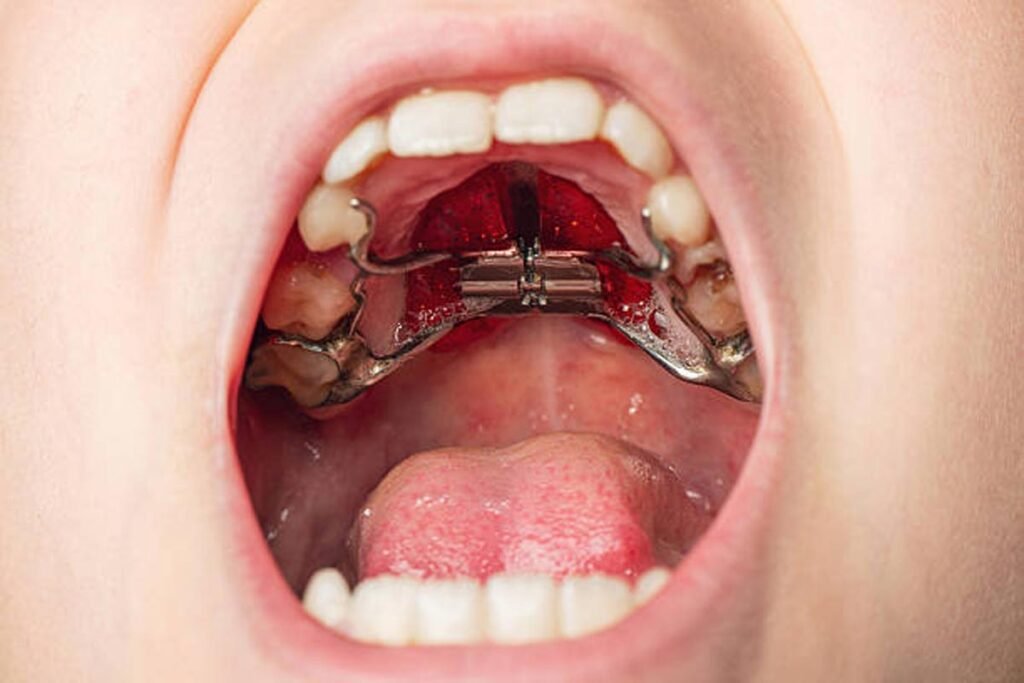
During expansion, a small gap may appear between the two front teeth. This is actually a sign that the expander is working.
As the upper jaw widens, the front teeth may move apart slightly. Later orthodontic treatment normally closes this gap.
Parents sometimes worry when they first notice this change, but dentists usually explain that it is expected during the expansion stage.
Cleaning the Expander Needs Extra Care
Oral hygiene becomes more important after the appliance is placed. Food can hide around the metal parts of the expander.
Children should brush carefully around the device using a soft toothbrush.
Helpful habits include:
- Brushing after meals
- Rinsing the mouth with water
- Using a water flosser is recommended
This blog explains children’s dental care and routine visits.
Mild Pressure in the Following Weeks
Even after the first week, children may still feel mild pressure when the screw is turned. This is part of the jaw slowly widening.
Usually, the feeling lasts a short time and then goes away.
Parents should keep following the turning schedule given by the orthodontist.More information about orthodontic treatment options is explained here.
Kids Usually Adapt Faster Than Expected
Many dentists say children adjust quickly to the appliance. They may complain the first day or two, but after that, they often forget about it.
Children normally continue school activities, sports, and daily routines without major problems.
Parents just need to remind them about brushing and appliance care.
Follow-Up Appointments Are Important
During expander treatment, the orthodontist will schedule follow-up visits. These visits help the dentist check if the jaw is expanding correctly.
The dentist may also adjust the turning schedule if needed.
Seldom is there a need for a second round of expanders in patients with a very narrow maxilla or severe crossbites.After the expansion stage ends, the appliance may stay in place for 6 months. This helps stabilize the new jaw width before the next stage of treatment.
Braces or Aligners May Be the Next Step
For many patients, the expander is only the first stage of orthodontic care.
After enough space is created, the orthodontist may recommend braces or aligners to move the teeth into their final position.
Some patients later choose clear aligners depending on their dental needs.
Final Thoughts
Getting a palatal expander can feel unusual in the beginning for both children and parents. The mouth needs time to adjust to the appliance.
Small pressure, speech changes, and a temporary gap between teeth are common parts of treatment and usually improve with time.
If you’re concerned about your child’s bite, crowding, or jaw development, Dr. Kanchi Shah, a skilled board-certified orthodontist at Art of Smile Philadelphia, can evaluate growth and recommend the right treatment at the right time. According to the guidelines of the American Association of Orthodontists, it is suggested that children be checked by an orthodontist by age seven.
With proper care, regular cleaning, and follow-up visits, most patients adapt quickly and continue their daily lives normally.
FAQs
How long does it take to get used to an expander?
Most children get used to it in about 3-5 days.
Does turning the expander hurt?
It usually causes mild pressure for a few minutes but not severe pain.
Is the gap between front teeth normal?
Yes, it is expected and usually closes later during orthodontic treatment.
Can my child eat normally with an expander?
Yes, after a few days, most children return to normal eating with small adjustments.
How do we know if something is wrong?
Severe pain, looseness, or trouble swallowing should be checked by the orthodontist.