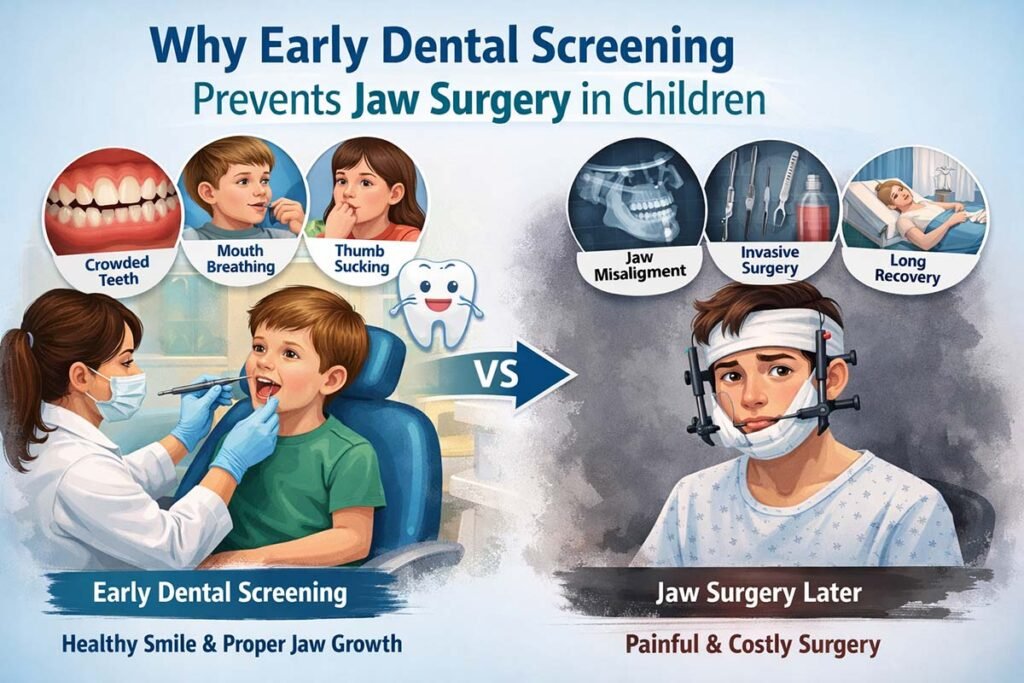
Early orthodontic intervention can help prevent your child from requiring invasive jaw surgery later in life. Identifying and addressing dental issues, such as misalignments, early on can help improve the situation and prevent problems from worsening in the future.
Early orthodontic involvement would not only bless your child with potential oral health, but it would also give them longevity as well. The Art of Smile Philadelphia can help you start your child’s oral health journey anytime.
What does Early Dental Screening mean?
Early dental screening means taking professional orthodontic intervention for your child in the age bracket of 6 to 9, at this stage, the jawbone is malleable and can respond effectively to dental treatments.
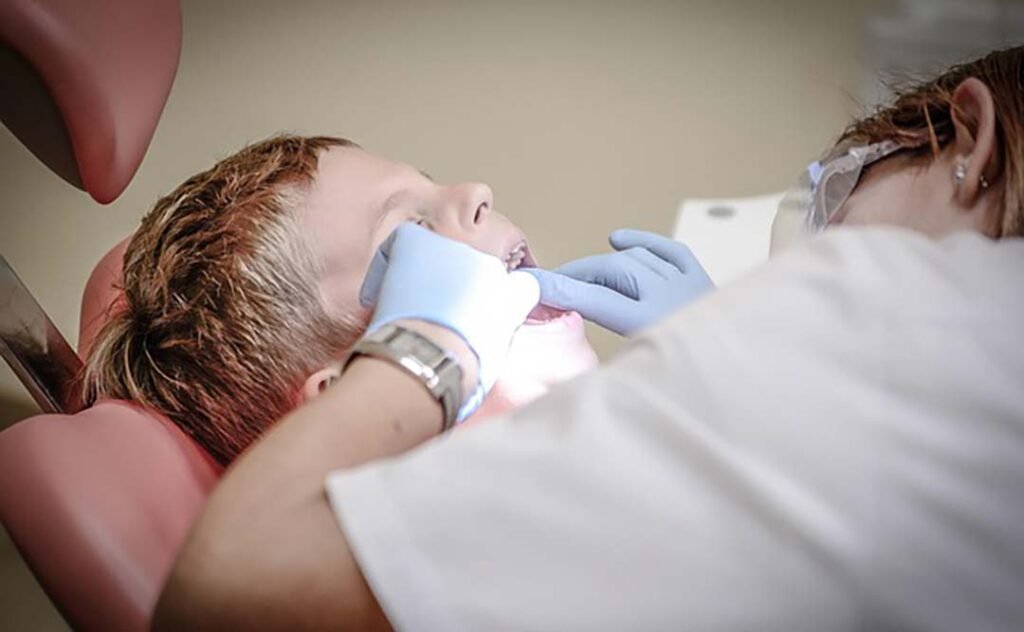
The aim of the early screening is to resolve the major dental problem in your kid at the initial phase.
Signs that Show Your Child Needs Orthodontic Intervention
Although the orthodontic issues initially can be very subtle, their impact on your child’s oral health in later stages may be highly significant. Here are the key signs that you shouldn’t ignore. Once you notice them, make sure to take professional help.
Biting & Chewing Difficulties
If your child is struggling with chewing and he/she is complaining about jaw fatigue. This sign may indicate misalignment and jaw discrepancies.
Speaking Difficulties
Improper speech indicates the misalignment of teeth and jaw. Early orthodontic intervention can improve confidence, public interactions, and speech.
Mouth Breathing
Mouth Breathing indicates restricted airways, which are caused by the misalignment of the jaw. This could lead to dry mouth, bad breath, and increase the risk of oral infections.
Overlapping of Teeth
Overlapping of teeth can result in tooth extraction if not managed early. In case you see overlapped teeth development in your child, make sure to get it corrected as early as possible.
Thumb or Finger Sucking
In case your child sucks his/her thumb, he develops an open bite for sure. This habit is harmful to your child’s oral health. You can take professional help for its correction.
Benefits of Early Orthodontic Intervention
Early orthodontic intervention provides numerous benefits, the major one being that it helps to develop the jaw properly. We are discussing the benefits in detail.
Influence Bone Growth
Early orthodontic intervention helps your child’s jawbone to grow in proportion because the child’s jawbone hasn’t fused yet and is highly pliable. Responsive to gentle orthopedic pressure. Earlier, a crossbite could be fixed by using a palatal expander but in adults, more invasive procedures are required.
To Prevent Tooth Extraction
Early orthodontic intervention ensures the correct eruption of your child’s permanent teeth. In later stages, there won’t be any need to remove permanent teeth because of overcrowding.
Protection Against Dental Trauma
Children with protruding front teeth have a higher risk of damage while playing sports and doing other physical activities. Because of early orthodontic intervention, the position of the teeth could be settled, and your child would be safe from any accidental dental trauma.
Harmful Oral Habit Correction
Children usually have a habit of thumb sucking and tongue thrusting; if they don’t stop on time, it may lead to an open bite problem. Early professional orthodontic intervention can help your child to stop such habits and reduce the probability of jaw surgery after 10 years.
Improved Social and Physical Well-Being
Once your child’s smile is perfect, he won’t feel underconfident. At school and social gatherings, he would be more open to speaking.
How Early Must One Take Orthodontic Intervention to Prevent Jaw Surgery?
A professional must pay attention to their child’s teeth development from the very beginning; the ideal age for orthodontic interventions is considered between 7 and 12. Their first visit should be as early as 6 years of age.
At this stage, the jawbone is malleable. Developmental issues like teeth crowding, big spaces, and more can be corrected by using some instruments such as braces, expanders, etc.
In case you miss out on these years, you can end up having jaw surgery after one year because once your child enters adulthood, their jawbone won’t be that responsive.
Why Not to Wait for a Later Age
Parents usually wait until later, but this complicates the issue, and your child may have to suffer more. Waiting not only complicates the issue, but it also burdens you financially.
The treatment costs are increasing day by day, and the longer you wait, the higher the cost of the treatment. In the early years, your child will cope with the challenges of the treatment with ease, and he/she will get enough care and time to recover.
In later years, the treatment may take a bit longer, and in those years, they can lose their focus on daily activities. Apart from this, they may also suffer image issues.
For the happy growing year of your kid, early intervention by your orthodontist can play a significant role.
Final Thoughts
Adopting early orthodontic intervention for your child could be a bit frustrating for you, but it would ensure a long term future relief. The future jaw surgeries can be avoided completely. To make this happen, start noticing the signs in your child.
Once you identify the signs, don’t be late to take professional help. You can contact Dr. Kanchi Shah, a veteran professional in the field. This little effort for your child may grant him/her happiness for life.
FAQ’s
What is the correct age for children to start with orthodontic intervention?
The right age to start early dental screening in kids is between 6 and 9 years. At this stage, the jawbone is malleable and responsive to the treatment.
What are the signs you must notice in your kids to start early orthodontic treatment?
Here are the signs you shouldn’t ignore.
– Speech difficulties.
– Protruding teeth.
– Overcrowded teeth.
– Chewing difficulties.
– Excessive gaps.
– Breathing issues, etc.
What are the benefits of early dental screening?
Early dental screening will help your kid to prevent dental issues at the initial stage, and he/she will not face any major jaw surgeries later in their life.